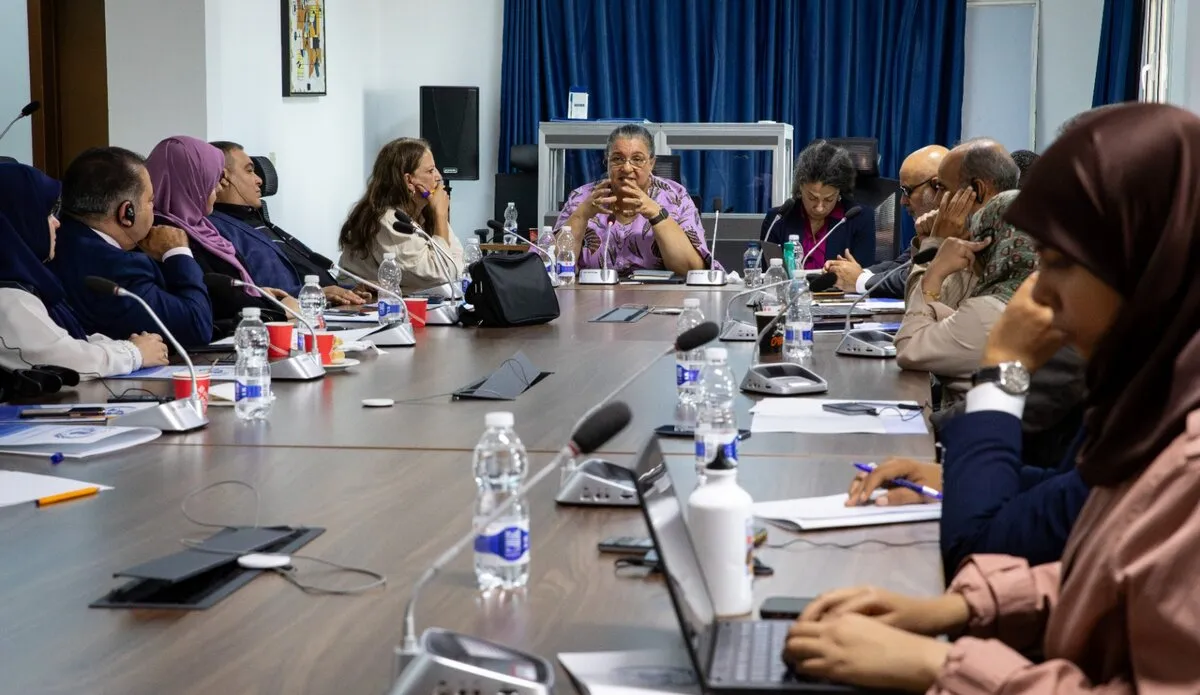
In response to an official invitation from the United Nations Support Mission in Libya (UNSMIL), I participated on Monday, November 3, 2025, in a high-level consultative meeting held at the mission’s headquarters in Tripoli. The meeting brought together representatives of organizations for persons with disabilities with the Special Representative of the Secretary-General, Ms. Hanna Tetteh, and her Deputy for Political Affairs, Ms. Stephanie Khoury.
I participated in this important meeting via the “Zoom” platform, as the meeting was dedicated to listening to the visions and demands of the disability community in Libya, and our perspectives on the priorities for political participation, especially in the context of the structured dialogue process facilitated by the mission.
During the discussion, we, as representatives, emphasized that the biggest challenge lies not in legal texts or international agreements, but in the actual “implementation gap” of the rights of persons with disabilities in public and private life.
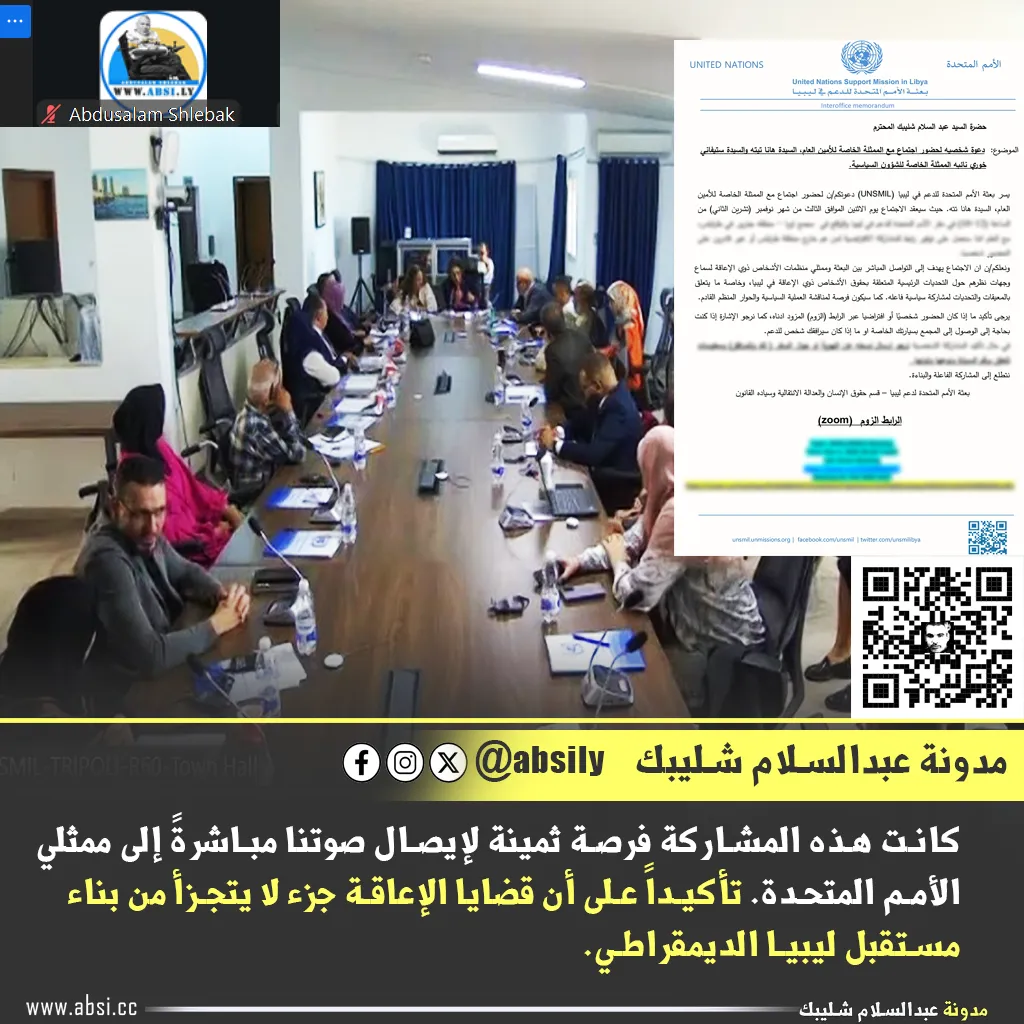
We stressed the imperative of moving towards “genuine and effective representation” for persons with disabilities in all national tracks and elected bodies, including Parliament and municipal councils. We called for the drafting of a joint working charter with the mission to establish clear criteria ensuring the fruitful participation of persons with disabilities in the upcoming structured dialogue. We also paid great attention to the need to empower women and youth with disabilities to ensure their effective inclusion in decision-making circles.
For her part, Ms. Hanna Tetteh affirmed the mission’s commitment to promoting inclusive participation. She highlighted the importance of involving persons with disabilities in all aspects of national life, including the “structured dialogue” process, which is a fundamental component of the political roadmap and represents one of the pillars the mission seeks to strengthen in the next phase.
For me, this participation was a valuable opportunity to convey our voice directly to the highest levels of the United Nations in Libya, and an affirmation that disability issues are an integral part of building Libya’s democratic future. They are an inherent part of the nation’s social fabric, and their involvement in political participation is important and necessary. Any national dialogue will not be complete or successful unless it includes the voices of persons with disabilities as “key partners,” not just “recipients” of services. At the same time, persons with disabilities must also deepen their understanding of the concepts of democracy and peaceful dialogue to ensure the effectiveness of this partnership. As a note for the future, we hope that upcoming meetings will be more organized with adherence to a clear agenda, as it was observed that the discussion sometimes deviated from its designated topic, perhaps due to the large number of participants.